

Battery Operated Toy Testing Before UAE Import
Every battery operated toy that lands in a Jebel Ali warehouse still has to clear the same three-part check before it reaches a shop shelf. Battery operated toy testing in the UAE runs through GSO EN 71, the Gulf region’s adopted version of the EN 71 safety series, and it applies whether the toy is a plastic robot, a musical plush, or a ride-on car. Skip it, and customs or a retailer’s compliance team will hold the shipment until the paperwork exists.
Table of Contents:What Do Battery Operated Toy Testing Cover Under GSO EN 71?
The GSO EN 71 framework has three parts, and most battery operated toys need all three run as one panel rather than piecemeal. That single-panel approach saves importers the back-and-forth of resubmitting samples part by part. Testhub Laboratories, an ISO/IEC 17025 accredited toy testing laboratory based in Jebel Ali, Dubai, runs this exact panel and issues a report that names every clause checked with a clear pass or fail against each one. Procurement teams can hand that report straight to a buyer, a retailer’s quality officer, or a customs inspector without further explanation.
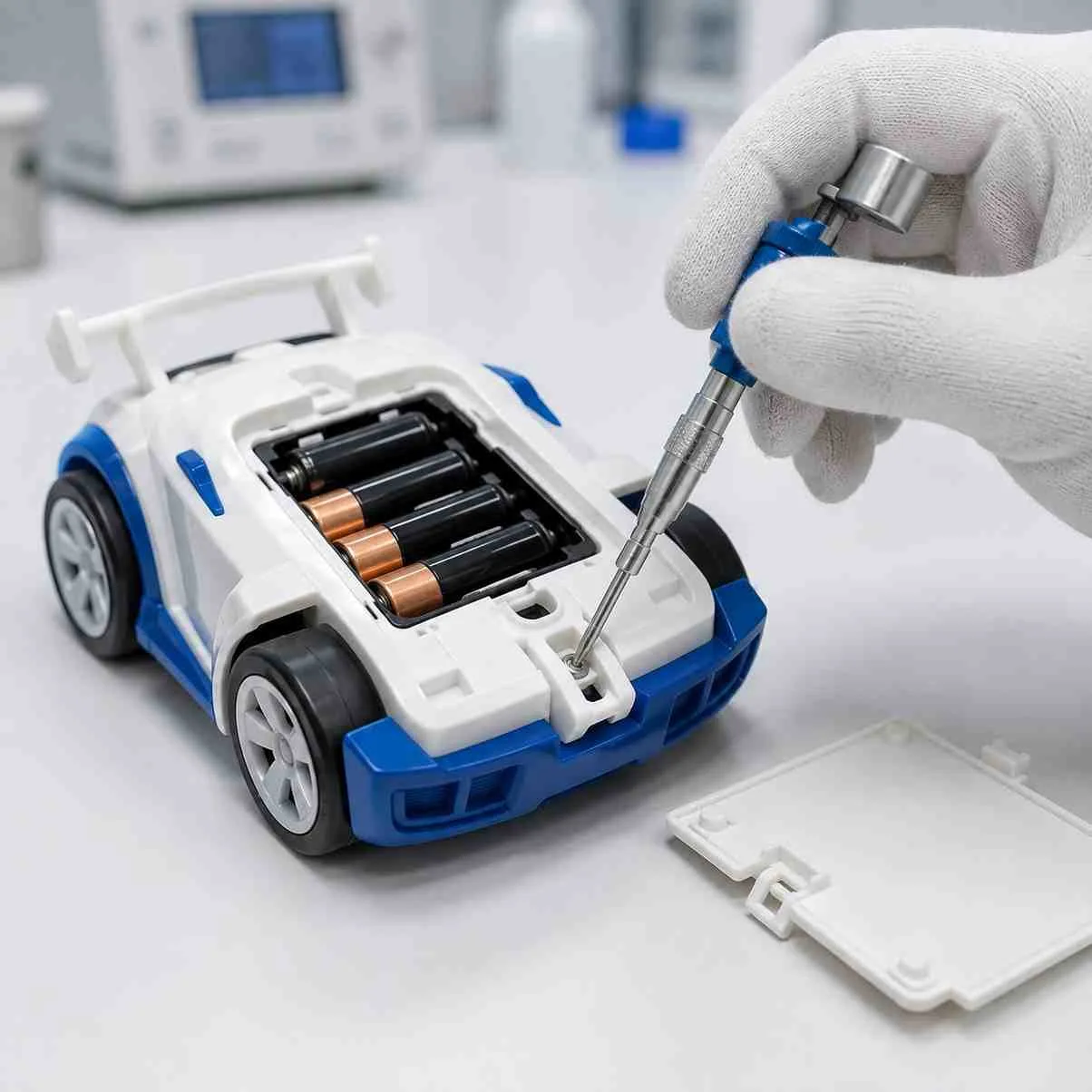
Battery compartments add a layer that mechanical testing has to account for. A compartment that pops open under normal play, or a battery that a toddler can pry loose, turns an otherwise compliant toy into a small-parts hazard. That is why the mechanical review sits at the center of the panel for anything powered.
GSO EN 71-1: Mechanical and Physical Properties
This part looks at the physical risks a child actually meets during play, not the risks a lab imagines on paper. Small parts that could choke an infant. Sharp edges left from moulding or assembly. Cords, elastics, and battery compartment latches that need to survive drop cycles and torque testing without failing. For anything aimed at children under three, this is usually the first result a buyer asks to see, since it covers the hazards most likely to cause immediate harm.
GSO EN 71-2: Flammability
Even toys built around a motor or a light-up feature usually include fabric, foam, or plastic housing that needs a flammability check. Testers measure how quickly a sample ignites and how fast flame spreads across it once lit. Soft components, pile fabric, and any loose flowing material get the closest look, and each sample is measured against the burn-rate limits set out in the standard.
GSO EN 71-3: Migration of Certain Elements
This is the chemical side of the panel, and for battery operated toys it covers the painted casings, plastic housings, and any modelling compound a child might mouth. Testers measure how much lead, cadmium, chromium, arsenic, barium, and other regulated elements can migrate out of the material. Samples go through simulated saliva and gastric conditions before the released amounts are checked against the limits in GSO’s published standards, which set the enforceable thresholds across the GCC.
Accreditation, G-Mark, and What a Compliance File Actually Needs
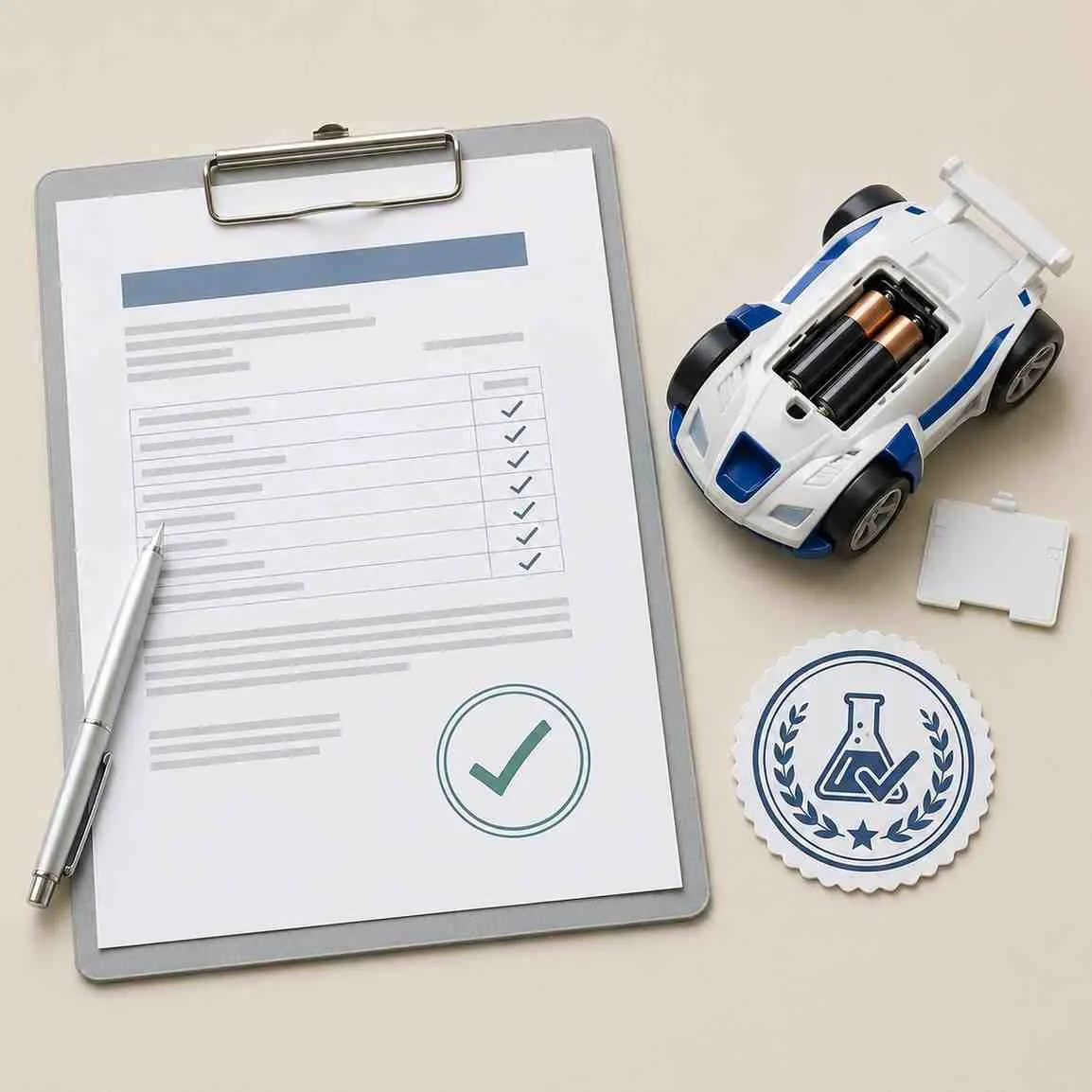
A test report only carries weight if the lab behind it is accredited. Testhub Laboratories holds ISO/IEC 17025 accreditation, which means an independent body has already assessed the lab’s methods and technical competence. Regulators and trading partners accept that data without asking for a re-test, which is the entire point of accreditation in a supply chain that moves across borders.
Regulated toys also need G-Mark conformity before they reach a shelf in the UAE or the wider GCC. Testhub’s toy testing scope generates the GSO EN 71 evidence that feeds directly into that G-Mark file, and the lab flags upfront which specific results the certification body will want to see, so nothing stalls at the last step of the application. Buyers, importers bringing new lines into the market, and e-commerce sellers who need compliance evidence before a listing goes live all work through the same panel.
A standard toy panel takes seven to fifteen working days from the day the lab receives a sample. Migration testing under EN 71-3 can run a little longer when a toy has several different materials or paint colours, since each one gets tested on its own rather than as a blended sample. Before sending anything, it’s worth checking with the lab on exactly how many units and which colour or material variants they need, since a battery operated toy with multiple casing colours often counts as several samples rather than one.
The people who tend to need this panel most are toy manufacturers finishing a production run for export, importers with a shipment already booked, brands entering the UAE market for the first time, and e-commerce sellers who need proof of compliance before a listing goes live. Each of these groups is working against a deadline of some kind, whether that’s a customs clearance window or a marketplace’s onboarding checklist, so getting the sample submission right the first time matters more than it might seem.
Final Thoughts
Battery operated toys carry an extra failure point that plain mechanical toys don’t, and that is exactly why the compartment and small-parts checks under EN 71-1 get so much attention during review. Booking battery operated toy testing early, well before a shipment is confirmed, avoids the scramble of a held container at Jebel Ali. If you’re bringing a battery-powered toy line into the UAE this quarter, what part of the compliance file are you still missing: the mechanical report, the flammability data, or the G-Mark evidence?
FAQ
Not a different standard, just extra attention within the same one. Battery operated toys still go through the full GSO EN 71 panel, but the mechanical review pays closer attention to battery compartment security and small parts, since a loose battery is one of the more common hazards buyers ask about specifically.
Budget seven to fifteen working days for a standard panel once the lab has your samples. If your toy uses several different paint colours or plastic types, the migration testing under EN 71-3 can stretch a bit longer, because each material variant gets tested separately rather than as one combined sample.
You get a report showing exactly which clause failed, whether that’s a sharp edge, a battery compartment that opened too easily, or an element migration reading over the limit. From there, most manufacturers adjust the design or material and resubmit a corrected sample rather than starting the whole application from scratch.
No, they’re connected but not identical. GSO EN 71 testing produces the technical evidence, and G-Mark is the conformity certification that relies on that evidence. You need the lab report first; then that report goes into the G-Mark application file for review.
It depends on whether the lab that issued it holds accreditation recognised in the UAE and GCC markets. ISO/IEC 17025 accredited results are generally accepted without a re-test, but a report from an unaccredited lab usually gets flagged and the importer ends up testing again locally anyway.


