Building Inspection Dubai: What Tests Are Required
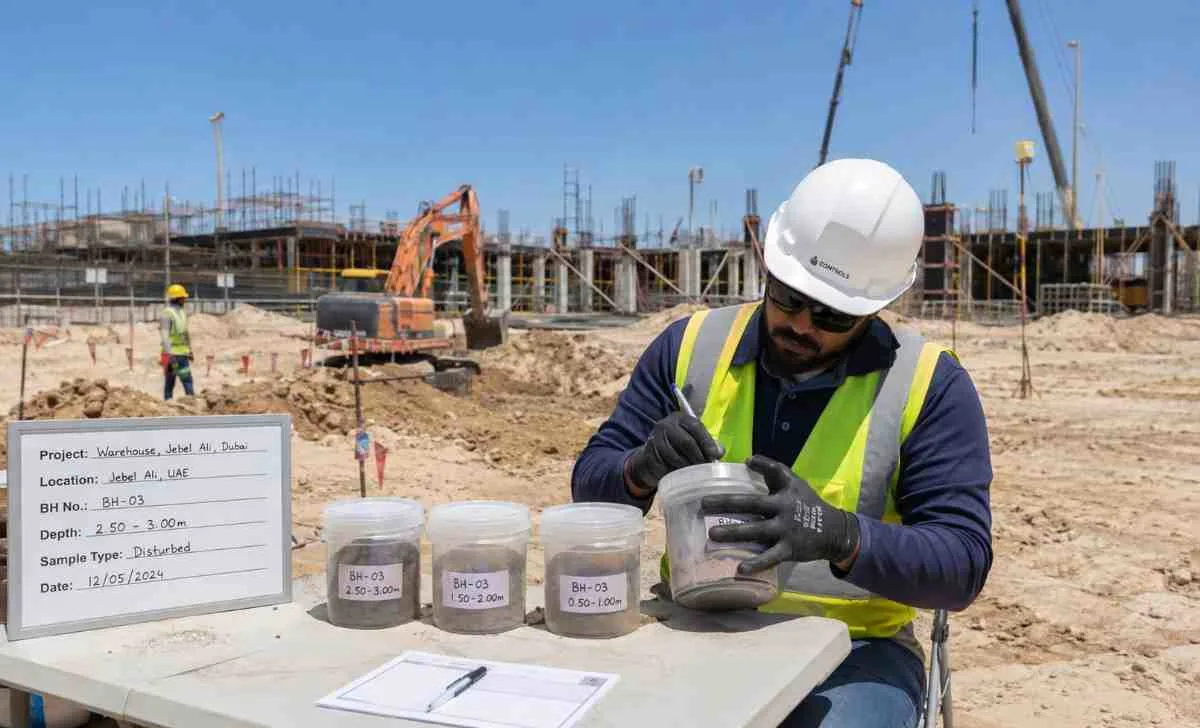
A contractor pouring a slab in Jebel Ali without soil data first is gambling with the building’s future. Building inspection Dubai; work rarely starts above ground. It starts underground, with samples pulled from different depths and sent to a lab before a single beam goes up.
Property owners and contractors working through Dubai Municipality approvals often assume inspection means someone walking through a finished site with a clipboard. That happens too, but the paperwork asks for test results long before the finishing touches get chosen. Soil composition, material strength, and structural stability under Dubai’s climate. Each has its own protocol, and skipping any of them tends to surface as a problem months later, the expensive kind.
Table of Contents:Why Do Soil Testing Come First, Not Last?
Every plot carries its own profile. Sand near the coast behaves differently under load than fill soil further inland, and Dubai Municipality’s own building permit procedures list soil test submission alongside topographic maps as a required step before construction technical review even begins.
The actual testing looks at more than whether the ground can hold weight. Labs check pH, moisture content, chloride levels, and the presence of heavy metals like lead or cadmium, since contaminated soil changes both the engineering approach and the environmental compliance picture. Testhub Laboratories runs this kind of analysis from its Jebel Ali facility, covering inorganic and organic contaminants, total and volatile solids, and organic markers such as TPH and BTEX. For a construction site, the practical output is simple: does the soil support the planned foundation, and does anything in it need remediation first? For agricultural or landscaping projects nearby, the same soil chemical analysis shifts towards nutrient content and salinity, which is a different question with a different set of tests.
Material Testing Covers What Goes Into the Building
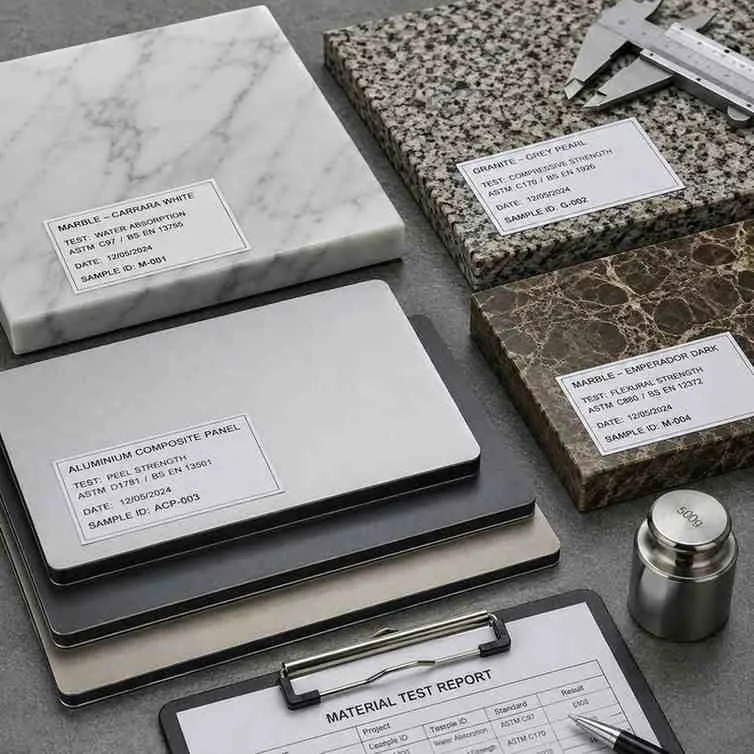
Once the foundation work is settled, attention moves to what actually gets built with. Material testing spans a wide range at this stage: tiles, marble, granite, and natural stone paving get evaluated for strength and wear resistance, and flooring surfaces in high-traffic or wet areas often need slip resistance checked as part of that same scope, since a polished stone floor that looks right can still fail a basic safety threshold. Aluminium composite panels, insulation, cladding, glass, and wood-based panels get their own testing lines, because each material behaves differently under Dubai’s heat and humidity swings.
Waterproofing membranes and bituminous products matter just as much, particularly on roofs and below-grade structures where leakage shows up years after handover if the membrane wasn’t verified early. Adhesives, sealants, and self-adhesive tapes get bond strength testing too, since a facade panel is only as reliable as what’s holding it in place. None of this is optional box-checking. A cladding panel that fails a fire or strength test after installation costs far more to fix than one flagged during procurement.
Why Accreditation and Building Inspection Dubai Standards Actually Matter Here
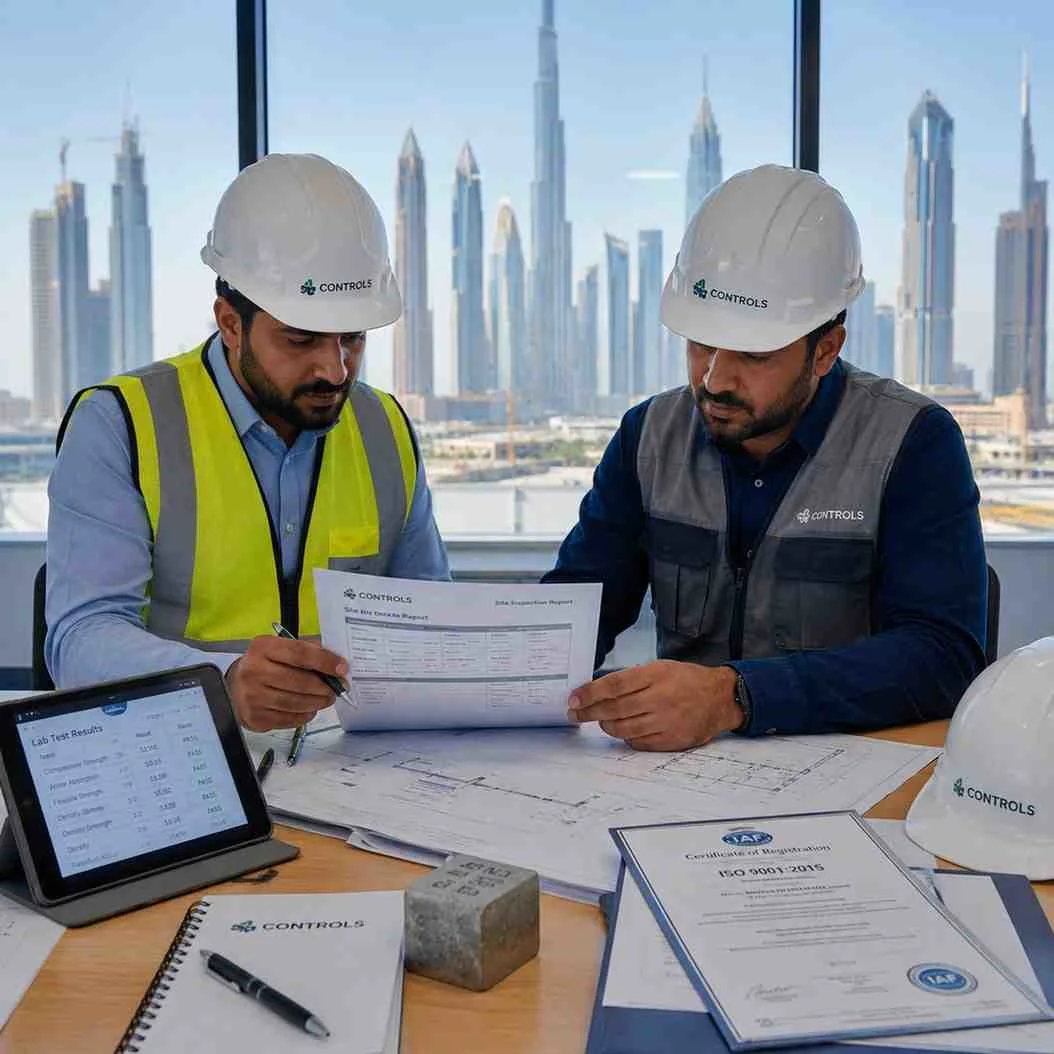
Not every lab report carries equal weight with regulators or insurers. Testhub Laboratories operates as an EIAC-accredited facility providing services under ISO/IEC 17025, the international standard covering the competence, impartiality, and consistent operation of testing laboratories. That accreditation is what allows a test report to hold up when submitted alongside a building permit application or presented to a client questioning material quality. A test run in an uncertified lab might produce the same numbers, but it won’t carry the same standing when someone asks where the data came from.
Who Actually Needs These Tests
Construction and property development teams drive most of the demand for building inspection Dubai services, but the same testing scope serves environmental consultants checking contamination risk, government agencies reviewing compliance submissions, and even landscaping projects working out fertilization plans from nutrient analysis. The timing matters more than people expect. Soil testing belongs before excavation starts, not after. Material testing belongs during procurement, not after installation. Waiting until a problem is visible usually means the fix involves demolition.
Final Thoughts
Building inspection Dubai requirements aren’t a single checklist item; they’re a sequence: soil first, materials next, and documentation throughout. Projects that treat lab testing as a formality tend to be the ones that hit delays during municipality review. What does your current project still need verified before the next inspection stage?
FAQ
It depends on sample depth and how many contaminants get screened. A basic pH, moisture, and load-bearing check moves faster than a full heavy metals and organic panel. Most contractors build a week or two into their schedule for lab turnaround before submitting results to the municipality.
Most renovation jobs still trigger it, especially anything touching flooring, cladding, or waterproofing. A contractor might keep the existing frame but swap in new tile or a different membrane, and that new material still has to meet the same strength and safety checks a fresh build faces. Skip it, and problems tend to surface fast.
Construction testing focuses on load-bearing capacity, contamination, and structural stability. Agricultural testing leans toward nutrient content, salinity, and organic matter. Same discipline, different questions, and often different sample depths.
Polished natural stone can look flawless and still pose a fall risk in wet or high-traffic zones. Slip resistance testing measures how the surface performs underfoot in real conditions, which matters for pool decks, lobbies, and outdoor paving especially.
Unaccredited results can still be technically accurate, but they rarely carry weight with a permit officer or an insurer. Dubai Municipality and most private developers expect lab reports tied to a recognized standard such as ISO/IEC 17025, because that accreditation proves someone else checked the lab’s methods and equipment. It’s a common reason applications get sent back.