
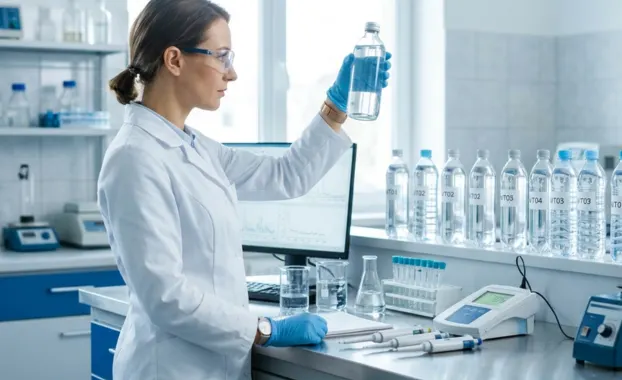
Bottled Water Testing in the UAE: What Labs Check
A sealed bottle gives you a brand name, a volume and a mineral table on the label. It does not show what a laboratory measured inside. Bottled water testing fills that gap by checking microbes, minerals, metals and physical traits against written specifications. This guide walks through each group of checks, explains how to read the numbers, and points out where a report stops being useful.
The short version: a lab panel for packaged water usually covers bacterial counts, pH, conductivity, turbidity, colour, taste, odour, anions, hardness, heavy metals, residual chlorine and total dissolved solids. Results are then read against specifications such as GSO 1025.
Table of Contents:Why One Test Is Never Enough
Water analysis identifies impurities and pollutants, including bacteria, chemicals and heavy metals that may pose health risks. No single method catches all three, so labs split the work into microbiological, chemical and physical groups. That split explains how every bottled water report is laid out. Drinking water work looks at the chemical and microbiological quality of potable water first, then adds physical traits such as colour and odour so the full picture sits in one document.
Which Samples a Lab Can Analyse
Water analysis reaches well past the kitchen tap. Laboratories in the UAE work with public and private supplies, seawater, groundwater, swimming pools, air conditioning systems, showers, water tanks and industrial effluent. Bottled water and natural mineral water sit on that same list, so bottled water testing borrows the method families used for any drinking water job. The sample just arrives in a sealed container instead of a pipe. The same checks also support public supply monitoring, building tank testing, bottled water verification and hotel or hospital facility compliance.
Methods follow recognised references such as APHA, ISO and BS. A lab accredited to ISO/IEC 17025 runs validated procedures, so the numbers rest on a documented method.

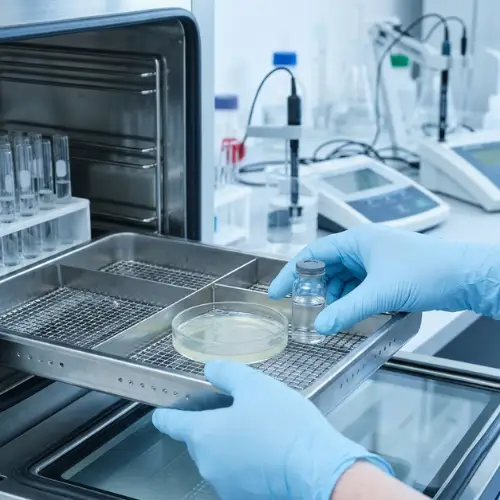
Microbiological Checks in Packaged Water
Microbiology comes first because nobody can see or taste it. A typical panel counts aerobic colonies, also called total bacterial count, then looks for total coliform, faecal or thermotolerant coliform, Escherichia coli, Pseudomonas aeruginosa and intestinal enterococci. Legionella species appear on the drinking water list too.
Each result is a count or a presence check, set against the limit in whichever specification applies. A single clean result describes one sample taken on one day. It is not a standing statement about a brand.
Physical and Chemical Parameters
Physical checks record appearance, turbidity, colour, taste and odour. Chemistry adds pH, conductivity, temperature, chloride, sulphates, nitrates, nitrites, alkalinity and hardness. Read together, these numbers describe the mineral character of the water, which is why two bottles with similar labels can look quite different on paper.
Total dissolved solids get a gravimetric test of their own. WHO describes TDS below approximately 600 mg/L as generally having good palatability. A reading of 40 mg/L is generally considered safe to drink, and 500 mg/L still sits under the WHO figure. Portable kits give a rough TDS reading at home, nothing more.
Metals, Disinfectant and Radioactivity Screens
Lead, arsenic, cadmium and mercury head the heavy metal list for drinking water. Total and residual chlorine are measured too, because leftover disinfectant shows up in the data. Some programmes also screen gross alpha and gross beta, which cover radioactive substances.
Each group needs its own method, so a full panel is a different job from a strip test.
What Bottled Water Testing Cannot Tell You
A report describes the sample the lab received. Another batch or filling date can be read differently. Labs can interpret results against a chosen specification and give an opinion where needed, so ask which specification was used before comparing two reports side by side. Check the sample type as well, because bottled water, tank water and effluent follow different limits.
Health questions need a different route. If you have a medical condition, an infant at home or symptoms that worry you, speak to a doctor or your local health authority. A lab report is data, not medical advice.
Final Thoughts
Packaged water looks uniform on a shelf, yet the parameters behind it run long: microbes, minerals, metals, chlorine residues and physical traits. The numbers only mean something besides the right specification, which is why the sample type and the standard deserve a second look in any report. Testhub Laboratories in Jebel Ali, Dubai, lists bottled and natural mineral water among the water types it analyses. So the next time you lift a bottle, which of these parameters could you actually find on paper?
FAQ
Mostly bacteria, pH, conductivity, turbidity, taste, odour, minerals, heavy metals and chlorine. They also measure total dissolved solids and compare everything with a specification such as GSO 1025.
WHO guidance recommends staying under 600 mg/L. Above that, water can taste salty or bitter. If the number worries you, a qualified lab can retest it.
Only a little. Portable kits can read basic things like TDS, but bacterial counts and heavy metals need laboratory methods.
It signals that the lab runs validated methods under ISO/IEC 17025 and documents its results. Check the accreditation scope before you order a report.


