Why PCR is the Secret to Meeting Halal Certification Requirements
Trust isn’t just a label; it’s a promise. For food manufacturers and exporters, meeting halal certification requirements is about more than ticking a box. It’s about ensuring that every single ingredient in your supply chain is pure and compliant. One small oversight can lead to massive recalls, legal headaches, and a total loss of consumer trust.
At Testhub, we bridge the gap between “hope” and “certainty.” We use high-precision laboratory testing to verify that your products are exactly what you say they are. No guesswork. Just hard data that keeps your brand safe in a competitive market.
If you’re a business owner looking to expand into halal-conscious markets, you need to know how science backs up your claims. Let’s look at how PCR testing has become the gold standard for verification.
Table of Contents:
What Exactly Are the Halal Certification Requirements?
The core halal certification requirements involve proving that food products are free from porcine (pork) DNA, alcohol, and other prohibited substances. It also covers the source of meat and the hygiene of the processing facility. Documentation is a big part of it, but laboratory testing provides the physical proof.
In many regions, especially the UAE and Saudi Arabia, authorities demand rigorous evidence of “halal integrity.” This means you must show that no cross-contamination occurred during production or transport.
How Does PCR Testing Verify Halal Status?
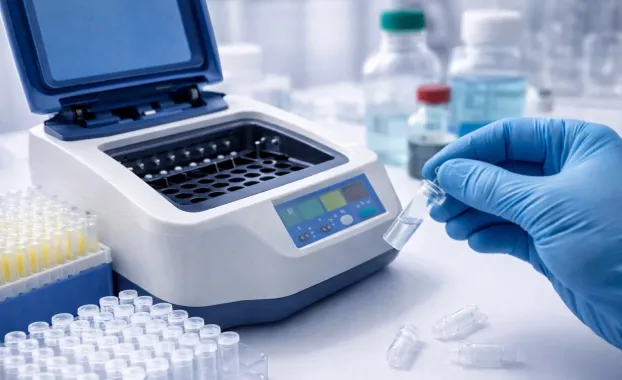
PCR, or Polymerase Chain Reaction, is the most reliable way to detect forbidden DNA. It works by amplifying tiny fragments of genetic material to see if porcine content is present. Even if the pork is highly processed or hidden in an additive, the PCR test will find it.
At our laboratory, we specialize in halal meat identification and porcine content analysis. We don’t just look for large pieces of meat; we look for the biological footprint. This level of detail is necessary for gelatin, enzymes, and emulsifiers that often hide in plain sight.
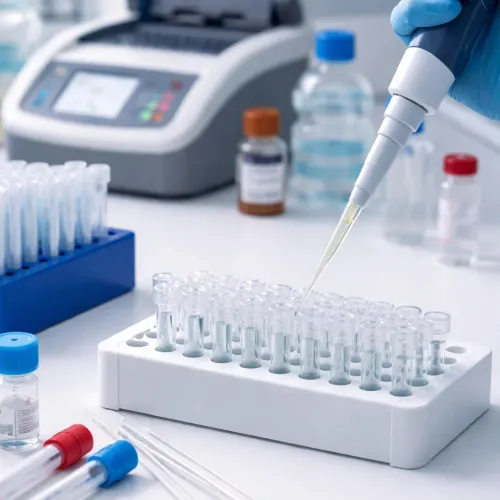
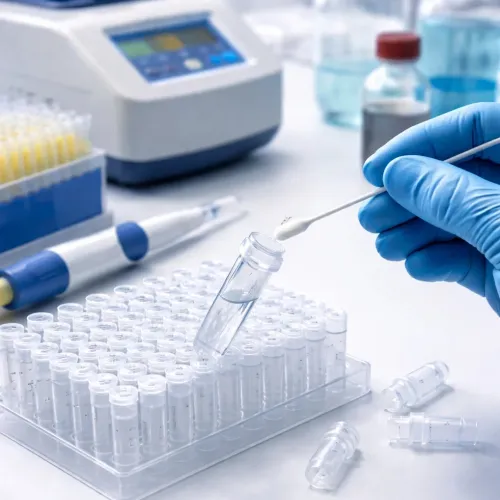
Why PCR Is the Preferred Method:
- Sensitivity: It can detect even trace amounts of DNA.
- Accuracy:It eliminates the "false positives" often found in cheaper, rapid test kits.
- Speed: Modern labs can deliver results quickly to avoid holding up your supply chain.
Can GMO Analysis Affect Your Halal Status?
The short answer? Yes. While Genetically Modified Organisms (GMOs) are a separate category, many certification bodies look at the source of the modified gene. If a plant has been modified with a gene from a prohibited animal, it could jeopardize the Halal status.
Testhub provides comprehensive GMO analysis alongside our Halal testing suite. This ensures that your halal certification requirements are met from every angle: biological, chemical, and genetic. It’s about total transparency for the end consumer.
Why Is Lab Testing Better Than Just Checking Paperwork?
Paperwork can be forged or simply wrong. A supplier might tell you their additive is plant-based, but without a lab test, you’re just taking their word for it. Laboratory testing is the ultimate safety net for your brand’s reputation.
We’ve seen cases where cross-contamination happened in a shared facility. The paperwork was clean, but the product wasn’t. A single PCR test caught the issue before it reached the shelves. That’s the difference between a minor adjustment and a PR disaster.
Who needs this level of verification?
It isn’t just for meat producers. If you manufacture cosmetics, pharmaceuticals, or processed snacks, you are likely using ingredients that require vetting. Business owners in the food and beverage sector use our reports to satisfy local regulators and gain access to international markets.
Final Thoughts
Navigating the world of food compliance can be tricky, but you don’t have to do it alone. Meeting halal certification requirements is a journey of science and ethics combined. By using PCR testing and GMO analysis, you provide the transparency that modern consumers demand. Ready to verify your products?
FAQ
The short answer? Often, yes. While some traditional certifications rely on audits, most modern regulators in the Middle East and SE Asia now require lab-backed proof for high-risk ingredients like meat and gelatin.
Usually, you’re looking at a few business days. We know that in the food industry, time is money. We focus on getting you accurate results without making your shipments sit in a warehouse for weeks.
Yes. Unlike other tests that look for proteins (which break down in heat), PCR looks for DNA. DNA is much tougher and can be detected even after boiling, frying, or baking.
Don’t panic—that’s why you test before shipping. We help you identify where the contamination might be happening so you can fix your supply chain and protect your brand.
Not always, but it’s becoming more common. Many premium markets demand “non-GMO” labels, and checking the Halal status of those GMOs is a smart move for any exporter.