
Laundry Detergent Testing in the UAE: Key Tests
A detergent label makes its promise in one line. The lab work behind that line is a long list of measurements. Laundry detergent testing covers the chemical, physical, and performance checks that show whether a powder or liquid matches its claims and the rules of the market it enters. Demand for cleaning and hygiene products keeps rising across the UAE and GCC, so more brands now need that evidence on file.
This guide is written for manufacturers, importers, private-label brands, and quality teams. It is educational, and it does not replace advice from a qualified chemist or the regulator in your market.
Table of Contents:What Do Detergent Testing Measures?
Detergent testing checks what is in a product, how it behaves, and how well it cleans. Labs compare results against ISO, EN, BS, ASTM, DIN, SASO, or GSO methods, and the right choice depends on the product type and the target market.
Detergent quality testing applies to liquids and powders. It also reaches related items such as germicidal liquid detergents, glass cleaners, and industrial hand cleaners, plus synthetic detergents made for fruit and vegetables. Laundry detergent quality sits inside that wider group, and each product type gets a method that fits it.
The Chemistry Checks Behind the Label
Most detergent testing parameters start here.
| Test | What it shows |
|---|---|
| pH | Acidity or alkalinity of the product |
| Active matter | Active content, checked by anionic, non-ionic, and cationic type |
| Phosphate and silicate | Percentage of each in the formula |
| Moisture and volatile matter | How much of the sample is water or evaporates |
| Viscosity | Thickness and flow |
| Foam formation | How much foam does the product build? |
| Heavy metals | Lead content |

Performance and Stability Tests
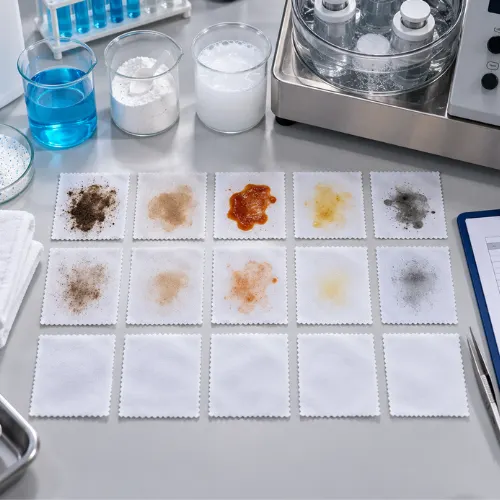
Chemistry says what is in the bottle. Performance work shows what it does. The cleaning efficiency test of detergent under an ASTM method uses standardized surfaces and soils, so every result comes from controlled conditions instead of a home trial. Rinsing properties get checked as well, along with chemical stability and microbial contamination.
Laundry Detergent Testing for Powder and Liquid Formulas
A lab can run these checks on both forms and on business-or consumer-grade formulations. Where a product has an unusual use, method development can be tailored, so a plan for laundry detergent testing fits the formula rather than a generic template.
Ingredients, Limits, and Compliance
Ingredient checks confirm what is present, at what concentration, and whether it fits local and international rules. Heavy metals, with lead named specifically, sit on the measured list.
A test report describes the sample that was tested. It does not replace regulatory approval, and requirements differ between markets, so confirm them with the relevant authority.
Where the Results Get Used
Manufacturers, exporters, importers, private-label brands, and regulatory teams all rely on these reports. They feed research and development first, then the final quality checks before launch. Toiletries such as shampoos and hand soaps follow a similar path.
Final Thoughts
Good detergent testing is a stack of small, checkable facts: pH, active content, foam, rinsing, a controlled stain test, and a heavy metals screen. None of them stands alone. A lab such as Testhub Laboratories in Dubai builds these plans around ISO, EN, ASTM, SASO, and GSO methods. So before the next batch ships, which of these checks is still missing from your test plan?
FAQ
Yes, that’s the usual route. Lab checks show whether a product cleans as claimed, stays stable, and fits the rules where it’s sold. Without data, a label claim is just a claim. Rules vary by market, so check yours with the local regulator.
They run a cleaning efficiency test, often under an ASTM method. Standardized surfaces get coated with standardized soils, the detergent goes on under controlled conditions, and the lab measures how much stain comes off. Same setup every time, so results compare fairly.
Plenty. Labs look at pH, active matter, phosphate and silicate percentages, moisture, viscosity, and foam. They also check rinsing, chemical stability, microbial contamination, and heavy metals such as lead. It’s a profile of the formula, not a single score.
Both forms go through the lab, and methods can be tailored to the formula or its use. Your product type decides the final parameter list, so it helps to ask the lab to confirm which ones apply before you submit samples.
Methods come from bodies like ISO, EN, BS, ASTM, and DIN, along with regional ones such as SASO and GSO. Which one applies depends on the product and where you plan to sell it. Check with the regulator before choosing a method.