PFAS Foam Testing in the UAE: Is Your System Still Legal?
The clock is ticking. As of January 1, 2026, the global regulatory hammer has officially dropped on firefighting foams containing PFOS and other “forever chemicals.” If your facility, vessel, or warehouse is still relying on legacy AFFF (aqueous film forming foam), you might be sitting on a major compliance liability. A professional PFAS foam testing UAE service is now the only way to verify if your stock is a life-saving asset or a hazardous-waste headache.
Table of Contents:
| SL | Contents |
|---|---|
| 1 | The 2026 Deadline: What Changed? |
| 2 | Why “Guessing” is a Risky Strategy |
| 3 | PFAS Foam Testing UAE: What the Lab Looks For |
| 4 | Final Thoughts |
| 5 | FAQ |
The 2026 Deadline: What Changed?
The start of 2026 brought into force strict amendments to SOLAS and international environmental codes. Essentially, the use or storage of fire-extinguishing media containing perfluorooctane sulphonic acid (PFOS) above 10 mg/kg is now prohibited.
This impacts everything from fixed fire suppression systems in industrial plants to portable extinguishers in commercial buildings. If your foam was manufactured before 2015 or is a “C8” variety, there’s a high probability it contains restricted substances. Even if you’ve recently switched to “C6” or fluorine-free alternatives, residual contamination in your tanks and pipes can still cause a test failure.
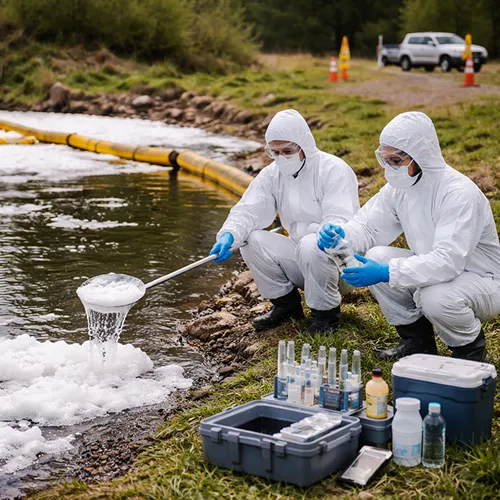
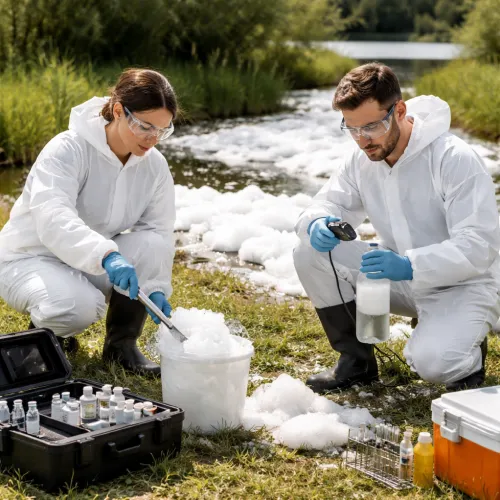
A proper study looks at more than just rot. It tracks:
Why "Guessing" is a Risky Strategy
You can’t tell if a foam is toxic just by looking at the bubbles. PFAS chemicals are persistent, and mobile, and as we now know, linked to serious health risks. In the UAE’s high-temperature climate, maintaining the chemical stability of your fire suppressants is already a challenge. Adding legal non-compliance to the mix is a recipe for disaster.
The Problem of Residual Contamination
Many businesses believe that simply swapping the liquid is enough. It isn’t. PFAS residues cling to the internal surfaces of tanks, valves, and proportioners. When the new, clean foam is added, it “picks up” the old chemicals. Without a validated lab report, you can’t prove to inspectors that your system is truly compliant.
PFAS Foam Testing UAE: What the Lab Looks For
Testing isn’t just about a “pass” or “fail.” It’s about technical precision. At Testhub, we use advanced analytical methods to break down exactly what’s in your system.
Key Metrics We Track:
- ➤PFOS/PFOA Concentration: Identifying restricted substances at the parts-per-billion level.
- ➤Chemical Stability: Ensuring the foam hasn’t degraded in the heat.
- ➤Expansion Ratio & Drain Time: Verifying that the foam still performs its primary job of smothering fires.
- ➤Sediment Content: Checking for blockages that could lead to system failure during an emergency.
Final Thoughts
The 2026 ban has turned “business as usual” into a compliance race. Whether you’re managing a fleet of ships or a chemical storage facility in Jebel Ali, the legal landscape has shifted. A certified lab report is no longer a luxury; it’s your evidence of due diligence.
FAQ
If it contains PFOS above the 10 mg/kg limit, the answer is yes. As of January 2026, the storage and use of these foams are prohibited under updated international and local regulations. You need to test your stock to be certain.
Absolutely not. PFAS are “forever chemicals” that contaminate groundwater. Disposal in the UAE must be handled through authorized hazardous waste channels. We can help identify the foam so you can plan for safe removal.
This happens often. The foam might still put out a fire, but it’s environmentally illegal. In this case, the system must be decommissioned, cleaned, and refilled with a compliant fluorine-free (F3) or C6 alternative.
Even without the PFAS ban, NFPA 11 recommends annual testing. With the new regulations in place, an immediate baseline test is essential to ensure you aren’t in breach of the 2026 mandates.