
The Evolving Landscape of Construction Material Testing: Trends and Insights
The construction sector is undergoing rapid change both globally and locally. The materials that ensure the durability and safety of buildings are now supported by advanced technologies in addition to conventional testing. No project can be future-proof without comprehending the modernization of construction material testing with real-time data sensor-based analytics and AI testing.
Table Of Contents:
What are Construction Materials And Testing?
The materials used in construction include cement, steel, bricks, sand, aggregates, concrete, and mortar. The strength, safety, and longevity of a construction project are determined by the quality of these materials. The scientific process of testing these materials to ensure they comply with specified standards is known as construction material testing. This enables evaluation of each component’s quality, durability, environmental resistance, and load-bearing capability.
Construction Material Testing Importance
- Steel, concrete, and soil strength tests can be used to determine the building’s true load-bearing capacity.
- Verifying that the materials satisfy the requirements improves the project’s overall quality and longevity.
- In order to obtain required permits and certifications, the majority of government agencies mandate material testing.
- Using subpar materials can result in enormous future repair, replacement, and structural damage costs.
- Investors and clients gain greater confidence when quality assurance tests are conducted.
- Early detection and correction of defective materials reduces the risk of accidents.

Construction Material Testing Procedures
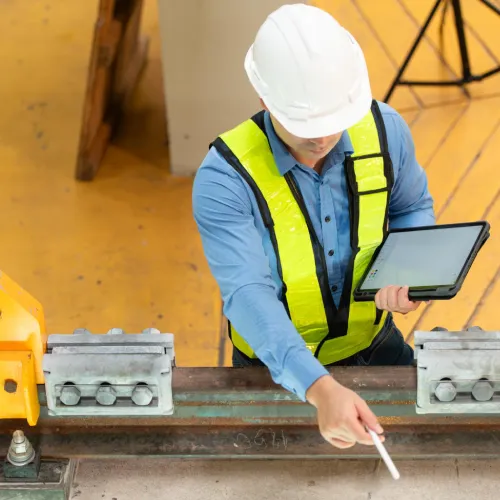
Proper testing of materials used in a construction project ensures its quality. National and international standards should be followed when conducting these tests in a methodical manner. Testing procedures for construction materials are organized methods that verify the materials’ durability, strength, quality, and safety.
The following steps are typically included in construction material testing procedures.
- Sample collection
- Visual inspection
- Laboratory testing
- Testing in the field
- Data analysis and reporting
- Quality acceptance and recommendations
New Trends and Insights in the Testing of Building Materials
Trends | Benefits |
|---|---|
| Digitalization and automation | Minimizing human error Accelerates testing Ensures accurate results Allows real-time data access Simplifies analysis and reporting Improves operational efficiency |
| Smart Technology & IoT Integration | Real-time monitoring Early problem detection Improved test accuracy Easy data collection and analysis Improves uptime and productivity Ensures quality and safety |
| Non-Destructive Testing Methods | Non-damaging testing methods Early detection of structural flaws Safe and efficient testing Reduces testing cost & time Consistent results Ensures construction quality |
| Sophisticated Imaging & Analysis Tools | Detailed structure examination Detects porosity and tiny defects High accuracy and reliability Real-time data analysis More effective testing processes |
| Sustainable and Eco-Friendly Testing | Supports environmental preservation Reduces waste Better energy efficiency Promotes recyclable materials Encourages green building practices Reduces potential issues |
| Mobile and Portable Testing Solutions | On-site testing Reduces testing delays Real-time data collection Quick action for site engineers Easy to use and portable Boosts productivity |
| Improved Reporting and Data Management | Accurate data collection Consistent reports Easy analysis Real-time information Faster decision-making Better quality assurance |
Insights | Benefits |
|---|---|
| Market Expansion | Demand for testing services is increasing More initiatives and opportunities Increased in investments in technology More job opportunities Better quality standards Greater availability of competitive services |
| Regional Industry Leadership | Boosts brand recognition and credibility Establishes strict testing quality guidelines Strong competitive market advantage Gains more contracts and partnerships Ensures customer trust Supports technological innovation in the industry |
| Technological Development | Increased testing accuracy and speed Reduced human error through automation Better real-time data availability Faster adoption of innovations Improved efficiency and productivity Enhanced quality control |
FAQ
What Is Construction Material Testing?
The process of evaluating the strength, durability, safety, and quality of materials used in construction, such as aggregate, steel, concrete, and soil, is known as construction material testing.
Why is Construction Material Testing important in the construction sector?
Building stability and safety are guaranteed by it. Testing is essential to prevent structural failures in the future and to ensure that standards are being followed.
When should testing be done on building materials?
Testing should be performed at various stages of the construction process, including foundation concreting and steel reinforcement placement.