Is Your GRP Safe? 5 Common GRP Testing Myths Debunked
Glass Reinforced Plastic (GRP) is widely used in major UAE infrastructure projects. From the massive pipelines in Abu Dhabi to the hulls of luxury yachts in Dubai Marina, we rely on it for its strength and corrosion resistance. But here’s the problem: there are a lot of “common misconceptions” floating around about how GRP actually works and how it should be checked. It’s time to set the record straight and look at the facts behind professional GRP testing.
Relying on a myth instead of hard data isn’t just a small mistake. In the construction and marine industries, it’s a liability. At Testhub Laboratories, we’ve seen how misconceptions about material performance can lead to project delays or, worse, structural failure.
Table of Contents:
Myth 1: GRP is Basically "Invincible" and Doesn't Need Testing
The short answer? Absolutely not. While GRP is famous for its durability, it isn’t magic. In the UAE’s extreme climate, where extreme temperature fluctuations occur and UV radiation is intense, even the best composite can degrade if the resin-to-glass ratio is off.
Without regular verification, you’re operating without verification. GRP testing ensures that the material actually meets the performance specifications required for your specific site conditions. If you skip the lab, you’re just hoping for the best. And “hope” isn’t a safety strategy.
Myth 2: If it Looks Solid, the Structural Integrity is Fine
Visual inspections are the biggest trap in the industry. You can’t see “creep” and you certainly can’t see microscopic delamination with the naked eye. A panel might look pristine on the surface while its internal bond is failing.
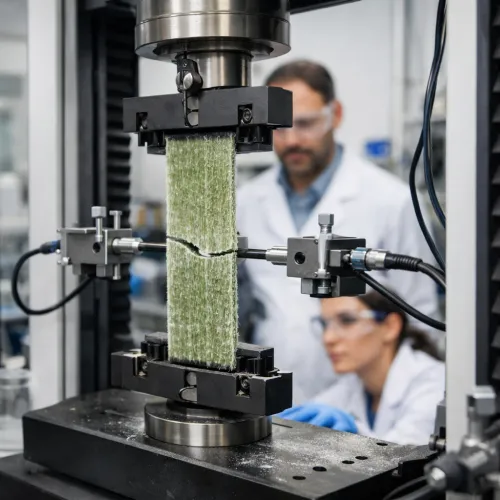
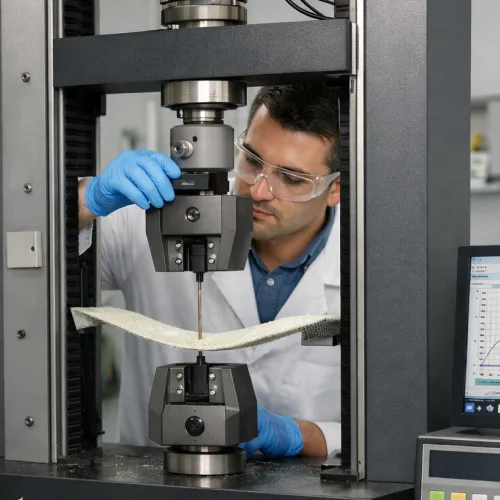
Mechanical tests like tensile and compressive strength analysis are used to see what’s happening inside. In the marine industry, assuming a hull is sound just because it’s shiny poses significant risk. Data, not aesthetics, determines safety.
Myth 3: GRP Testing Is Too Expensive and Slows Down Projects
Many project managers view the lab as a bottleneck. In reality, testing is a significant cost-saving measure. Think about the cost of ripping out a defective pipeline or repairing a collapsed GRP cladding system. It’s astronomical compared to a few days in the lab.
Testing isn’t a hurdle; it’s your insurance policy against the costly on-site failures that happen when materials fail on-site.
Myth 4: All GRP Behaves the Same in the UAE Heat
This is a critical misconception. GRP is a composite, meaning its properties depend entirely on its constituent materials—the type of resin and the glass fiber used. A GRP tank designed for a temperate climate may fail in extreme desert environments without proper design and without the right UV resistance and thermal stability.
Testing for water absorption and UV resistance is critical here. If your material isn’t verified for the local environment, it can become brittle and crack. Customized testing profiles at Testhub Laboratories help you pick the right material for the right location.
Myth 5: You Only Need to Test the Raw Materials
Checking the resin and glass before production is a good start, but it’s not enough. The manufacturing process itself—the “lay-up”—is where most errors happen. If the curing temperature isn’t right or the layers aren’t pressed correctly, the final product won’t perform.
Final product testing is essential. Finished components are tested to ensure the chemical resistance and impact resistance are exactly where they need to be. It’s the only way to guarantee compliance with international safety standards.
Stop Guessing and Start Testing
Relying on myths puts your reputation and your project at risk. Regulatory standards in the UAE are stringent regarding material failures, and neither are the regulators. At Testhub, we eliminate uncertainty through data-driven testing. We provide the hard data you need to ensure your GRP components are safe, compliant, and built to last.
Final Thoughts
Composite material technology is evolving rapidly. What worked five years ago might not meet today’s rigorous safety codes. By debunking these myths and sticking to a strict testing regime, you protect your bottom line and the people who use your structures.
FAQ
It can, but only if it was made and tested correctly. If the resin-to-glass ratio is off, that 50-year lifespan can drop to five years very quickly. Regular testing is the only way to know if your material is actually “long-term”.
Yes. We can take core samples from existing structures to check for degradation or chemical damage. It’s a great way to assess if an old tank or pipe needs replacing before it actually leaks.
That’s usually a sign of poor curing. It means the chemical reaction didn’t finish properly. It’s a major red flag for structural integrity and a common reason why GRP products fail our lab tests.
It depends on the additives. Standard GRP will burn, but fire-rated GRP is engineered to self-extinguish. We run flammability tests to make sure your “fire-rated” panels actually do what they say on the tin.